
When Should Drop Inlet Protection Go on a New Drainage Inlet?
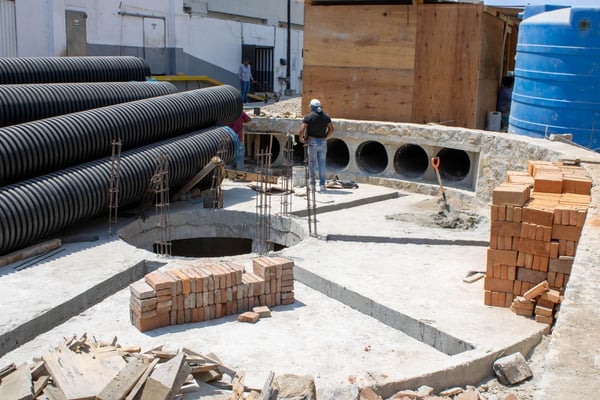
What happens if the drainage crew installs a catch basin and connects the pipe, but the grate isn't scheduled until next week? First of all, grading probably continues in the meantime. Rain now has an opening into the storm sewer, even though the inlet assembly is unfinished. That’s a sediment control compliance issue.
Whenever sediment-laden runoff could enter the structure, that’s your trigger for drop inlet protection. You can’t wait for the date of final paving. Make sure your project's approved sediment control plan addresses the risks and circumstances discussed below.
When a New Inlet Needs Protection
Our local Ohio EPA put out a storm drain inlet protection guidance in April 2026 that called for protection on “new drop inlets within the disturbance that are operational during construction until the area that drains to the inlet is permanently stabilized.” This was a state-specific guidance, but it’s advice that will look broadly the same across the U.S.
Once your inlet receives runoff from exposed soil, the proper control needs to be in place, end of story. Even if the grate isn't seated. The inlet is operational as soon as it has a functioning connection to the storm sewer and surface runoff has a path into the opening.
If there are existing downstream inlets, those will also need protection prior to any soil disturbance. An individual inlet protection practice is for an acre of disturbed drainage area. Dealing with a larger area? You’ll need additional sediment controls.
The Construction Sequence
Use these checkpoints for catch basin inlet protection:
- Before excavation: Identify runoff paths and existing downstream inlets. Install all upstream controls specified in the SWPPP prior to any soil disturbance.
- After the structure and pipe are installed: Check whether runoff has access to the new inlet. Even before the grate arrives, always document the inlet rim elevation and photograph the surrounding grade. Look for nearby stockpiles or vehicle ruts (relevant in an industrial yard, too) and temporary slopes that direct runoff toward the structure. Install approved temporary protection early so that the connected structure will convey no sediment into the storm sewer.
- When the grate is seated: Measure the assembly and match the specified device. You might consider grate-enclosing bags, below-grate sacks, or above-grate filters. Each attaches a bit differently, so choose the right one for your inlet (or ask a professional to advise you). Confirm that runoff passes through the intended filtration path.
- During pavement work: Reassess inlet exposure when curb forms come out and pavement elevations change. Additions like curbs can change and concentrate gutter flow, and there may be additional drainage and safety requirements once public traffic is a factor. You’ll want a dated field record for a smooth handoff to the next crew. It will help them understand whether the existing protection still intercepts the route water takes.
What if the Grate isn't Ready?
An open basin is both a fall hazard and an unfiltered route for sediment. Coordinate with the engineer on temporary safety measures and the SWPPP's approved runoff controls.
If you cannot yet install grate-mounted storm drain inlet protection, use a suitable temporary enclosure, like a sediment barrier or other diversion approved for the unfinished structure. Whatever you use, you want to preserve drainage and any required overflow. Be extremely careful about improvised solutions…the Ohio EPA, for instance, rejects loose fabric covering an inlet or a board over a curb opening as inlet protection.
If the basin has to remain accessible for pipe testing or backfill, you can’t leave the opening unprotected for an entire shift. Schedule temporary controls around those operations and assign someone to restore protection. Make sure to confirm (and document!) that no interim diversion has sent sediment-laden water toward another unprotected inlet or an unstable excavation.
Excavation pump discharge is a separate issue, but there are also dewatering sediment-control products available for compliance in those cases.
Paving Will Often Change or Concentrate the Flow of Runoff
The SWPPP guidance from the Missouri DOT says new inlets should receive protection right when they enter service. This is echoed by guidance in other states. There’s a changeover when the finished grade reaches the opening, though, so don’t overlook it.
You may have installed a temporary enclosure alongside an elevated inlet, but that same product could obstruct the finished roadway. After paving, you’ll have to reevaluate flow capacity and traffic safety. That earlier above-grate product might give way to a below-grate filter or curb-opening device, depending on the structure.
Inspect the flow path along the curb and identify any low spots where runoff could bypass the new device. Also take time to check that filter material isn't pinched beneath the grate frame or exposed to vehicle tires (even a properly selected filter can be damaged and lead to non-compliance).
Who has Responsibility at the Trade Handoff?
There are a series of crews that move through the site as stages change. The utility crews install the drainage structure, then grading and paving crews alter its exposure to runoff. Each time, you have to make the handoff explicit: who installs temporary protection, who changes it after grate placement, and who inspects it following rain?
Assign those tasks in the SWPPP, with a field check before each crew leaves. Otherwise, a newly connected structure could be overlooked between contractors.
Maintenance and Removal
We can look to the Minnesota Stormwater Manual here for a good general recommendation: Do inspections both before and after rainfall or snowmelt. Check for sediment accumulation, bypass, damaged fabric and unsafe ponding. Clean or replace devices as needed.
You’re required to keep stormwater inlet protection in place until the contributing drainage area is stabilized. It’s a common mistake to think that’s whenever pavement is finished. Even if you’re done paving, that doesn't mean nearby slopes and landscaping have stopped shedding sediment. Confirm, confirm, confirm.
Get the Right Drop Inlet Protection
Check out Dandy Products for industry-favorite grate-enclosing bags, below-grate sacks, and above-grate filters. If you need help picking out the right inlet protection products, get in touch with us and share your inlet dimensions and project specifications. We’ve got a customized size for everything!
FAQs
Does an inlet need protection before its grate arrives?
Yes, if runoff reaches the structure. Use an approved temporary measure suited to the unfinished inlet.
Should controls go in before catch basin excavation?
Install required upstream controls before soil disturbance. Protect the new structure before it starts receiving sediment-laden runoff.
Is plywood over an inlet enough to control sediment?
A safety cover isn't a substitute for an approved stormwater sediment-control device.
Does a raised inlet need protection before final grading?
Check whether runoff reaches it at its current elevation. Protection must suit the temporary grade and drainage conditions.
Should the same filter stay in place after paving?
Reassess the device. Finished grades and traffic access sometimes require a different style of protection.
Who maintains protection after the utility crew leaves?
The contractor or responsible party designated in the SWPPP. Confirm the assignment during the handoff.
Does a below-grate sack fit every catch basin?
Check frame compatibility, grate dimensions, and the manufacturer's installation specifications.
When is it safe to remove inlet protection?
After the contributing drainage area meets stabilization requirements and the applicable permit allows removal.
