Sustainability
Dandy Supports You and the Environment
One of the greatest environmental concerns we face today is soil erosion. It reduces the amount of viable cropland, pollutes waterways, destroys habitats and alters ecosystems. There’s no doubt that new construction contributes to the widespread issue of soil erosion, but Dandy can help you stay compliant and protect the environment with erosion control best management practices.

Growth of Regulations:
Sediment and Erosion Control Best Practices
When land and roads are torn up for new construction, sediment is unearthed and carried away in stormwater — causing soil erosion and putting waterways and public water systems at risk for contamination.
To protect water, soil, wildlife and natural habitats, regulations pertaining to sediment and erosion control have been in place in the U.S. since the Environmental Protection Agency (EPA) announced the Clean Water Act (CWA) in 1972.
Since then, regulations have grown extensively, as have fines for noncompliance. Among other things, contractors are required to use professional-grade inlet filters and erect their own sediment control solutions whenever they start a new project. That’s where Dandy comes in…

Soil is being swept and washed away 10 to 40 times faster than it is being replenished.
We Make Compliance Easy
Every day, contractors rely on Dandy’s line of compliance-ready sediment control, inlet protection and oil contaminate removal products — as well as our expertise in federal regulations and NPDES certification — to get and stay compliant.
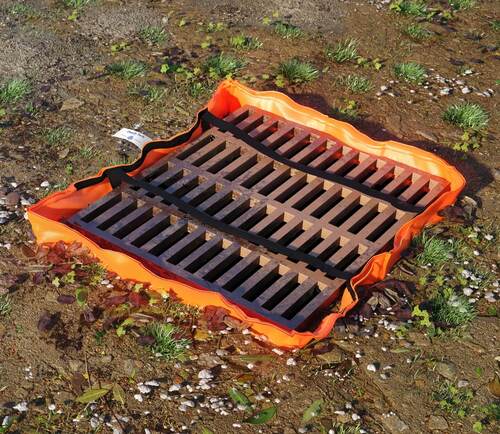
Complete Drop Inlet Protection
Our inlet filter family consists of high-quality, time-tested solutions that help protect storm grates and storm drains from heavy, sediment-laden stormwater.
Reliable Curb and Gutter Inlet Filters
Dandy offers reliable and durable curb inlet filters and gutter inlet filters that will help you divert all sediment away from the inlet and prevent it from entering:
Easy, Permanent Oil Removal
No one wants to find oil contamination in water at a job site, but the powerful Dandy Skimmer® makes easy work of it. Its unique design provides maximum absorption of the oil and permanently solidifies it. Nothing could be easier.
Convenient, Effective Dewatering
Dandy Dewatering Bag® takes control to an all-new level. It’s designed to reliably control sediment discharge in dewatering applications where water is being pumped. It comes in three sizes to fit any size job. Dewatering has never been this easy and convenient.

FAQs
Where does all the sediment collected by inlet filters go?
Contractors must periodically remove accumulated sediment and dispose of it according to their project's stormwater pollution prevention plan (SWPPP) and applicable regulations. Collected material should be kept away from drainage pathways to prevent it from washing back into the stormwater system.
Why is stormwater still muddy after passing through an inlet filter?
Very fine particles, including clay, remain suspended in water longer than coarse sediment and are harder to capture through filtration alone, and that’s normal. If you’re experiencing excessive flow or sediment bypass, that can also reduce filter effectiveness. Contractors should evaluate filter performance and consider additional upstream sediment controls if runoff is still extremely muddy after moving through the filter.
Are reusable inlet filters better for the environment than disposable options?
Reusable inlet protection helps reduce material waste by extending the useful life of filtration products across multiple installations. However, reuse depends on proper maintenance and product condition. Damaged or severely clogged filters should be replaced rather than reused at the expense of filtration performance.
Is inlet protection enough to prevent stormwater pollution on a construction site?
No. Inlet protection captures sediment near drainage openings, but contractors also need measures to prevent soil erosion upstream. Stabilized slopes, perimeter barriers and sediment basins help reduce the volume of loose soil reaching storm drains in the first place.
Do construction projects near streams or wetlands need additional protection?
Projects near sensitive waterways need extra attention because sediment has a shorter path to receiving waters. Site-specific permits and environmental requirements determine the necessary controls. Contractors should evaluate runoff pathways and establish appropriate erosion prevention measures before beginning soil disturbance.
Do stormwater inlet filters remove pollutants other than sediment?
Standard geotextile inlet filters primarily capture suspended soil particles and debris. Dissolved chemicals and other contaminants require different treatment methods. Some Dandy products accommodate optional oil absorbents, while specialized products like Dandy Skimmer target floating oil.
Could inlet protection cause flooding during heavy rainfall?
An undersized or clogged filter restricts drainage and causes water to accumulate around the inlet. Select products with sufficient flow capacity for the drainage area, and remove accumulated sediment before it obstructs filtration. Check the site's drainage requirements before changing or removing installed protection.
Where should I discharge filtered water from a dewatering bag?
Filtered water should flow onto a stable, suitable discharge area without creating additional erosion. Contractors must account for drainage pathways and applicable discharge restrictions. Placement near steep slopes, waterways or unstable ground increases the risk of sediment entering surrounding water resources.