
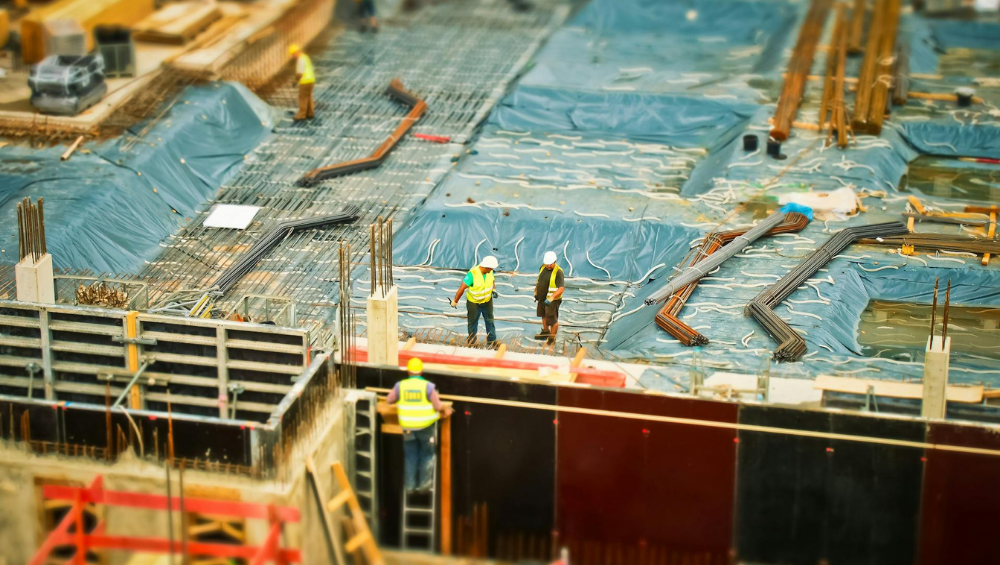
Construction sites present contractors with various stormwater drainage scenarios as phases change. A site may begin with large areas of exposed soil and heavy sediment loads during grading. The paving process often introduces curb-and-gutter systems, and then the final phases may restrict space around inlets with structures and paved areas where drainage has to stay unobstructed.
Because of these evolving conditions, there’s no universal solution for sediment control. Most projects will need to select multiple inlet protection devices so they can match the construction conditions present at each phase.
Get to know the different approaches to inlet protection so you can always pass inspections and project reviews.
Early Grading: When Sediment Loads Are Highest
The first phases of construction will usually generate the most sediment. Grading and excavation leave soil exposed, where runoff from rainfall can easily carry large volumes of it toward storm drains.
Sites will usually opt for filtration bags or similar inlet protection erosion control devices to protect stormwater systems at the inlet. Below-gate devices are most popular because they capture suspended sediment but allow water to continue entering the system as normal.
However, bags alone can be overwhelmed in extremely high sediment conditions, so sites often use more than a single layer of protection for erosion and sediment control.
Some projects rely on improvised controls made from basic materials. According to the Tennessee Department of Environment and Conservation,“various types of area inlet protection practices can be constructed from common materials such as conventional riprap, sandbags, or gravel-filled bags.” These improvised systems can slow sediment movement, but purpose-built inlet protection devices often provide more consistent filtration and installation fit.
Paved (or Partially Paved) Sites With Curb and Gutter Systems
Runoff patterns will shift once paving begins. Water flows laterally along curb lines before entering storm drains, which changes how curb inlet protection must function. Specifiers should focus their attention on:
- Proper fit within the curb opening so runoff can’t bypass the filter
- Good, free drainage flow through the filter
- Time until debris buildup could restrict drainage
Research summarized by The National Transportation Library confirms that inlet protection performance corresponds closely to correct installation and proper fit. When devices do not match inlet geometry, runoff will often bypass the system altogether. You’ll want to avoid improvised or adapted devices meant for other inlet types. Protection designed specifically for curb openings works best.
High-Flow Areas & Major Storm Events Challenge Inlet Devices
Certain inlets receive concentrated runoff from slopes, drainage swales, or large paved surfaces. During a major storm, an area like this could experience a far higher flow volume than typical for inlet protection bags.
Specifiers must ask themselves three questions to select an inlet protection device in areas where this is a risk:
- Can the device maintain flow during heavy rain?
- Will it stay in place under strong runoff?
- Does it still capture sediment effectively?
Hydraulic capacity is just as high a priority as sediment capture in high-flow areas. Research conducted through Auburn University found that filtration performance declines when runoff velocity and sediment concentrations exceed device design limits.
Tight Urban Sites With Limited Access
Urban construction environments have to accommodate for limited installation space and access for maintenance. This is a site type that must prioritize:
- Compact installation footprints
- Minimal disruption to traffic flow
- Simple inspection and maintenance procedures
There are traffic lanes, sidewalks, and pedestrian areas to act as further constraints. Improperly fitted inlet protection barriers may restrict drainage in ways that could create safety issues. Device selection will be a public concern in a dense project environment.
To Sum Up: Conditions Drive Selection of Inlet Protection Devices
Each construction environment will have unique runoff and inlet traits. The table below gives you a basic comparison of the site conditions we’ve covered and how they influence your choice of inlet protection erosion control devices.
| Construction Condition | Primary Concern | Typical Device Approach |
| Early grading | Heavy sediment loads | Below-grate filtration bags |
| Curb and gutter areas | Directional runoff | Curb inlet protection |
| High-flow drainage points | Hydraulic capacity | High-capacity filtration systems |
| Tight urban spaces | Installation fit | Compact inlet protection barriers |
A condition-based evaluation like this will help specifiers to recommend best-fit solutions so inlets remain compliant in all project phases.
Again, no single device solves every stormwater challenge on a construction site. Most projects will rely on a combination of the above approaches to respond to prevalent on-site conditions. If you need further guidance or access to trusted solutions, contact one of the leading inlet protection providers in the USA.
