
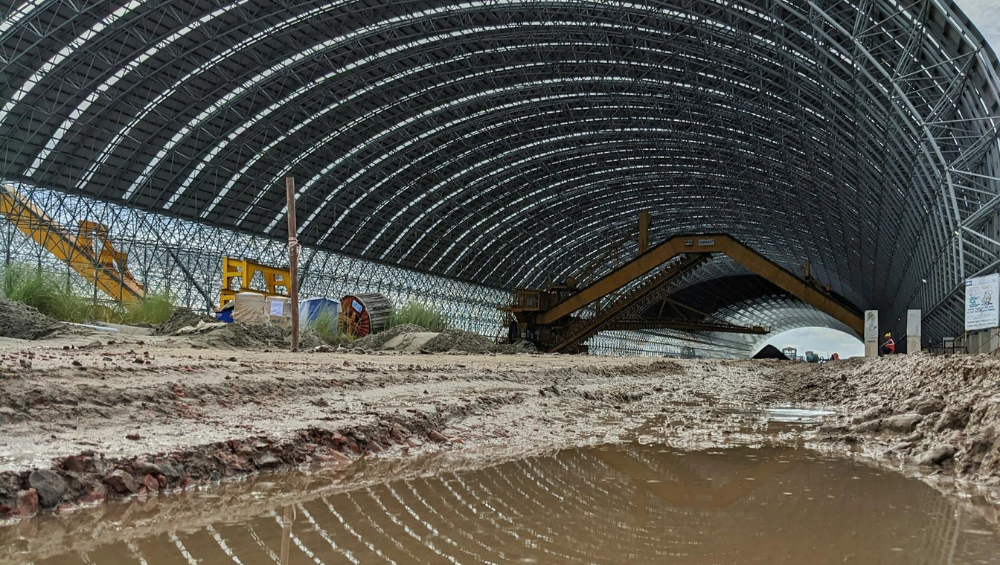
Heavy rain exposes every weak point in your stormwater runoff management plans. Water will always follow the fastest path downhill, and it carries sediment, debris, and pollutants with it. Take care to cover all angles of sediment bypass prevention, because if runoff overwhelms drains and low spots, compliance issues and cleanup can be expensive.
Never wait for the forecast to change before you think about stormwater runoff control. Put the time in to identify potential problem areas in advance so you can install appropriate controls for your inlets and site layout.
Here are six ways to improve runoff performance before the next storm rolls in.
1. Identify the Most Likely Runoff Pathways
Since water always finds the low point, likely runoff patterns can be mapped before heavy weather arrives. Walk the site before major rain events and identify:
- Low spots & curb flow concentration points
- Areas with exposed loose soil (especially slopes)
- Unfinished grading
- Specific storm drain inlets that are likely to receive the heaviest flow
- Locations where runoff may bypass controls
Conditions change constantly during construction, so review regularly. A drainage path that didn’t exist two weeks ago may become the biggest sediment problem on-site after the next storm. The earlier those issues are identified, the easier they are to control.
2. Match Inlet Protection to Flow Conditions
High-flow areas often require stronger filtration systems and overflow protection to prevent bypass. Temporary geotextile inserts, curb inlet filters, and below-grate filtration systems can all play a role depending on inlet type and runoff volume.
Catch basin inserts and geotextile fabric-based inlet protection are specified in federal guidances from the EPA as an effective temporary BMP because it slows runoff while capturing sediment before water enters the system. Many guidances from local state agencies and organizations, such as the California Stormwater Quality Association (CASQA), also highlight reusable geotextile inserts, which are installed beneath grates or inside curb inlets, as practical temporary protection solutions. They’re easily removable, and many can even be cleaned and reused.
3. Use Gravel Bags and Wattles Correctly
Gravel bags and wattles can be good solutions for slowing runoff before it reaches the inlet. One common mistake, though, is placing them directly over the grate. This can block drainage entirely and create flooding issues. Instead, position them securely near and around the inlet to create temporary ponding that allows sediment to settle out before water enters the drain.
Heavy-duty geotextile gravel bags like our Dandy Recycler, filled with recycled rubber, are perfect for filtering out sediment like a pea-gravel-weighted wattle, but they’re easier to install and reuse.
Deploy layered stormwater runoff control around curb and gutter inlets during larger rain events to stop the transport of sediment into stormwater systems and keep drainage flowing.
4. Inspect Inlet Protection Before and After Storms
A protection system that worked last month may not survive the next rain event without maintenance. Inspect all inlet protection before storms arrive and immediately afterward. Many state guidances, such as this one from Ohio, specify that protection devices placed on an inlet draining pavement must “be cleaned after every runoff-producing rain event” — and for good reason. Lapses in maintenance with built up sediment in the receptacle is a common cause of compliance issues and sediment bypass. Look for:
- Sediment buildup
- Torn geotextile fabric
- Shifted or collapsed barriers
- Water bypass around edges
- Standing water caused by clogging
Crews sometimes underestimate how quickly sediment builds up during consecutive rain events. Most inlet protection systems should be cleaned once accumulated sediment reaches roughly half the height of the barrier or half the depth of the containment area. Waiting longer increases the risk of bypass, overflow.
Pre-storm inspections help crews catch weak points before they fail under heavy runoff conditions, but post-storm checks are just as important.
5. Always Review Local Stormwater Requirements
Many construction crews are used to working across multiple municipalities. Keep in mind that stormwater sediment protection guidelines and regulations vary widely between cities, counties, and state agencies. An inlet protection plan that meets compliance requirements on one project may not meet requirements somewhere else.
Before your project breaks ground, be sure to review local guidance and confirm your site is meeting current environmental and zoning expectations for temporary runoff control, inlet protection, sediment containment, and inspection schedules (specific preferred language for these measures may vary by region).
This step is often overlooked on fast-moving projects. Don’t fall into that trap. Take time to confirm local requirements and head off potential inspection issues.
Stormwater Runoff Control Starts Before the Forecast Changes
Dandy Products helps contractors manage runoff and meet NPDES II compliance with durable inlet protection solutions. Our orange Dandy products are recognizable anywhere. If it’s not orange, it’s not Dandy! The advanced geotextile fibers of our drop inlet bags and curb-mounted solutions will handle sediment-laden runoff over and over again — and they’re easy to clean and reuse from site to site.
Give us a call or drop us a line. Our experts will review your project specifications and quickly guide you to the most effective solution for your application.
FAQs About Stormwater Runoff Management
Stormwater runoff management refers to the methods used to control how rainwater moves across a site. The goal is to reduce erosion, prevent sediment from entering storm drains, and minimize downstream pollution during and after construction activities.
Heavy rain increases flow rates and carries more sediment toward storm drains. Proper inlet protection helps slow runoff, capture sediment, and reduce the risk of clogged systems, bypass, and compliance issues during storms.
Inlet protection should be inspected before major rain events, after storms, and during routine site maintenance checks. High-sediment jobsites may require more frequent inspections to remove buildup and check for damage or displacement.
Common warning signs include sediment bypass around inlets, standing water caused by clogging, torn geotextile fabric, displaced barriers, and erosion forming near drainage pathways or slopes.
No. Effective stormwater runoff control usually requires multiple measures working together. Inlet protection, perimeter controls, grading strategies, sediment traps, and routine maintenance all play different roles depending on site conditions.
Gravel bags and wattles slow incoming runoff before it reaches storm drains. This temporary ponding allows sediment to settle out while still allowing water to flow into the inlet system.
Excess sediment reduces filtration performance and increases the chance of bypass or flooding during future storms. Most inlet protection systems should be cleaned once sediment reaches roughly half the height of the barrier or containment area.
You must satisfy both. The federal government sets a baseline guidance, and local municipalities and state agencies all have their own local stormwater management requirements, inspection schedules, and approved BMP standards that go beyond them.
