
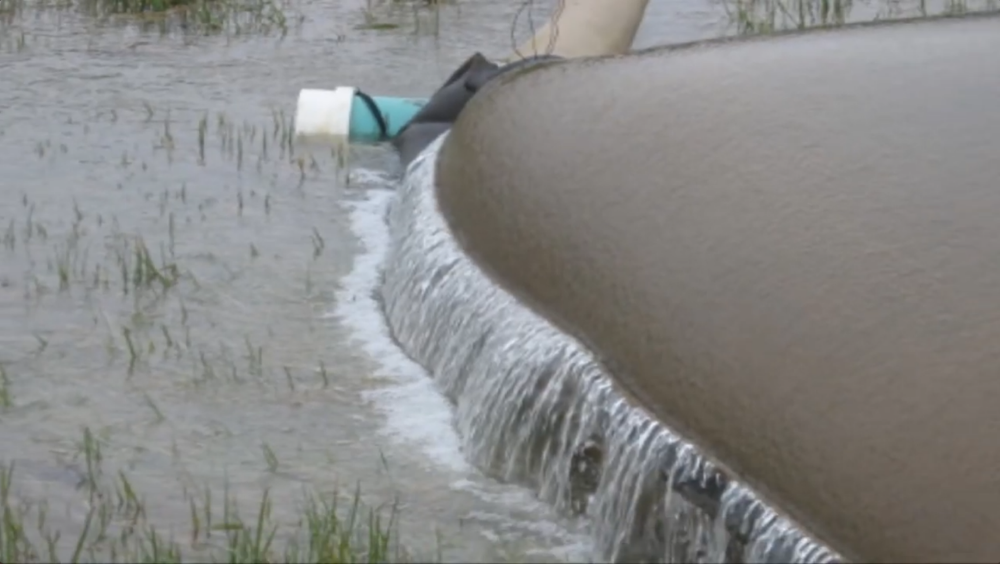
Standing water on construction and utility sites presents both a practical issue and a stormwater compliance concern. To stop excavations from filling up or trenches from becoming unstable, crews need to move water away. However, it’s important not to flood nearby areas or wash sediment into the storm system in the process.
The relocation of that water is called “dewatering.” Unlike general runoff management, which focuses on natural flow of water on the ground, dewatering involves pumped discharge.
There are different risks when you remove water from excavations, bore pits, utility trenches, or low areas and redirect it somewhere else than there are with ordinary rainfall runoff. Sediment is one concern, but discharge velocity, erosion, and discharge location also have to be taken into account.
Dewatering bags are a cost-effective and targeted solution.
What Are Dewatering Bags?
Dewatering bags are porous, nonwoven geotextile bag most often used for Best Management Practice (BMP) purposes to filter out sediment from site runoff. They capture soil particles from pumped water inside a contained filtration bag, then release the clean water where it can enter nearby drainage systems or receiving areas.
Note that dewatering bags are not a universal replacement for broader stormwater inlet protection measures across the site. They’re a targeted filtration tool within a larger dewatering system, specifically to be connected to a discharge hose from a pumping system.
Sediment-laden water enters the bag, water filters through the fabric, and sediment stays contained inside. Construction and utility crews may use them during any activities that commonly require pumping and discharge of water from areas with exposed soil, like:
- Utility trench work
- Excavation dewatering
- Pipe installation
- Manhole rehabilitation
- Bore pit operations
- Emergency repair work
The biggest advantage of these solutions is that they’re flexible, temporary filtration — they don’t require any permanent infrastructure changes. Many crews can deploy them quickly with minimal setup, and some can even be reused from site to site. Dewatering bags often work alongside storm inlet protection systems already installed around or underneath nearby storm drains and curb/gutter inlets.
How Dewatering Bags Work In Your Dewatering System
Again, dewatering bags work as only one part of a larger dewatering system. Here’s a closer look into their specific role and functions.
Essentially, a pump moves water from the excavation or trench through a discharge hose into the bag. Water then filters through the geotextile while sediment collects inside. The filtered discharge can then flow outward across a stabilized area where runoff is not a concern. So, placement matters quite a bit. Pumped water will need somewhere stable to flow after filtration. A dewatering bag should never create additional erosion problems downstream.
Guidance in the Indiana Storm Water Quality Manual, just as an example, recommends placing filter bags on nearly level surfaces with stabilized outflow pathways to prevent erosion or uncontrolled discharge. The manual also recommends aggregate pads, mulch, straw bales, or pallets beneath the bag to improve drainage and reduce puncture risk.
Crews should also think about the impact of conditions like:
- Pump size and discharge rate
- Soil conditions
- Available discharge area
- Nearby slopes or waterways
- Potential erosion around the outflow
High-clay soils, for instance, will clog filtration fabric faster and may require larger bags or more frequent replacement. Consult your project’s local municipal or state guidelines for compliance requirements and recommendations.
Common Dewatering Bag Mistakes to Avoid
Dewatering bags are effective for filtration of pumped water, but they be careful not to misuse them. Here are a few common mistakes that can cause sediment bypass or compliance issues:
- Don’t treat it like a permanent filtration system. These bags are temporary controls intended for active pumping operations, not long-term site drainage management.
- Avoid poor discharge placement. Manuals will often specifically warn against locating filter bags near or on concentrated flow paths, wetlands, waterways, or unstable discharge areas. If filtered discharge causes erosion after leaving the bag, the system is still creating runoff problems.
- Proper hose attachment is a must. Loose or poorly clamped connections are a frequent failure point. They can leak unfiltered sediment before water even reaches the bag. Steel hose clamps and rigid connectors are great safeguards for watertight connections.
- You don’t want bags that are undersized for pump flow rates. If the bag is too small, you’ll overwhelm its filtration capacity. Excessive pressure can rupture seams or detach hoses.
- Dewatering bags are not designed to remove all contaminants. These systems target sediment removal. Don’t think of them as a broader contaminant treatment. However, certain types are available with optional oil absorbents.
Dewatering Is Just One Step of Your Sediment Control Plan
Dewatering bags manage sediment for pumping operations, but they’re only one piece of broader drain inlet protection and site runoff management.
Construction and utility crews still need proper inlet protection for all storm drains that will receive runoff from exposed soil. You’ll have to implement additional erosion control measures for natural runoff from heavy rain events, along with routine inspections and maintenance of all measures.
Explore all of our Dandy Products to stay in control of both sides of the equation — pumping and regular runoff — with durable sediment control solutions. We’ve supported stormwater compliance in construction and utility work for decades. Ask our team any questions you may have about temporary inlet filtration or pumping operations, and we’ll set you up with targeted solutions for the size, shape, and style of your pump or drainage system.
FAQs About Dewatering Bags
Dewatering bags are used to filter sediment from pumped water during construction and utility dewatering operations. They help reduce sediment discharge before water reaches nearby drainage systems or receiving areas.
No. Dewatering bags are designed specifically for pumped discharge from excavation or trench dewatering activities. Broader stormwater inlet protection measures are still needed to manage natural runoff across the site.
A pump sends sediment-laden water through a discharge hose into the bag. The geotextile fabric filters sediment while allowing water to pass through and discharge onto a stabilized area.
Dewatering bags should be placed on level or slightly sloped stabilized surfaces with enough room for filtered water to drain safely. Avoid placing them near waterways, steep slopes, or concentrated flow paths.
Some dewatering bags can be reused depending on the material, sediment load, and condition of the bag after use. Bags with tears, punctures, or clogged filtration fabric should be replaced.
Common failure points include undersized bags, excessive pump flow rates, poor hose connections, punctures, clogged filtration fabric, and unstable discharge placement that creates erosion downstream.
Most standard dewatering bags are intended primarily for sediment filtration. They are not designed to remove all contaminants from discharged water, although some configurations may include optional oil absorbents.
Construction and utility sites still need additional erosion and sediment control measures such as storm sewer inlet control, drain inlet protection, stabilized discharge pathways, and regular inspection and maintenance programs.
